
August 11, 2026
How Accurate Is AI Physique Rating? An Honest Answer
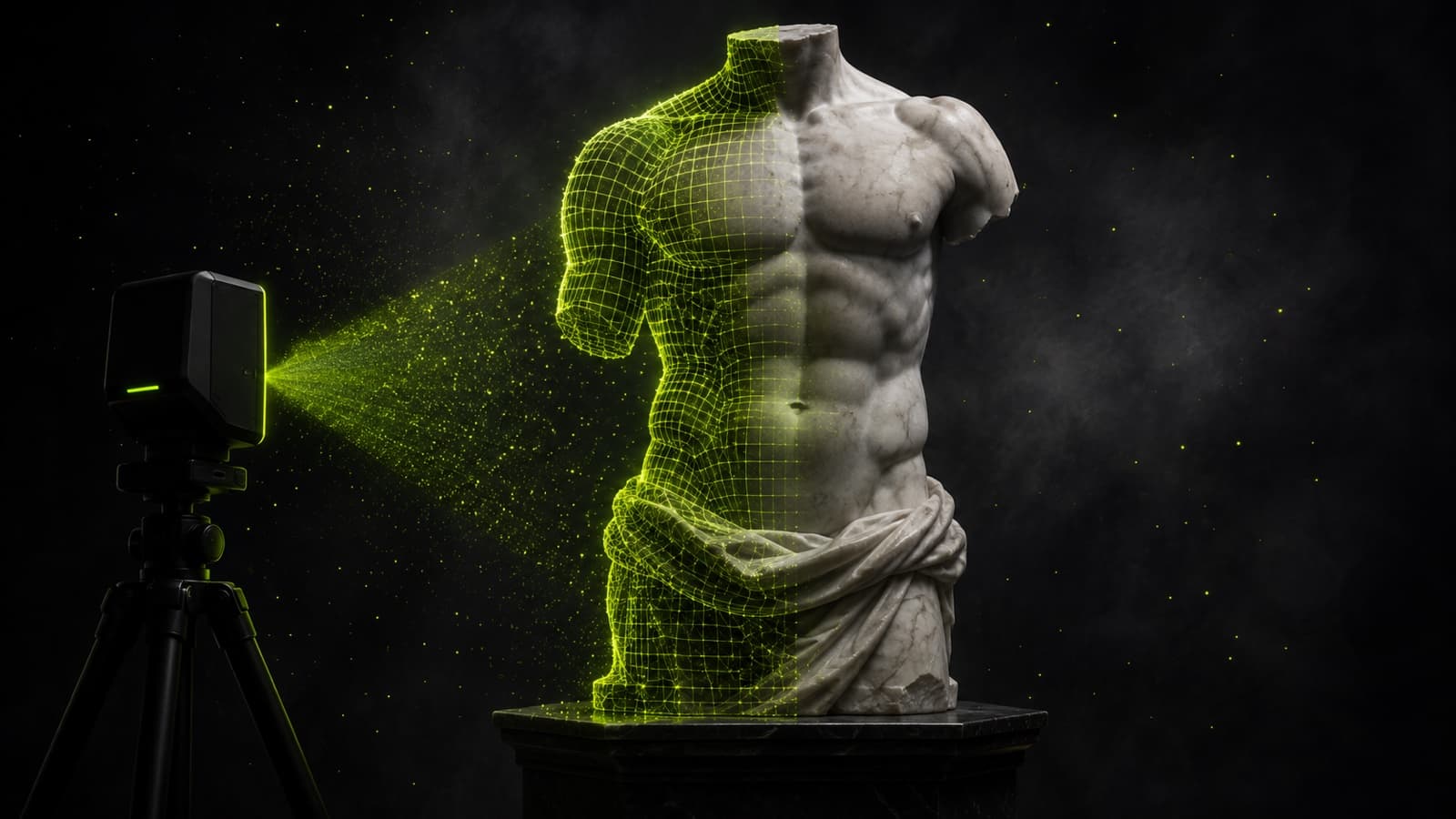
Can AI rate your physique accurately? Yes, within limits that can be stated exactly, and any honest answer has to start by stating them. An AI physique rating is a visual estimate of how a photographed body looks, measured against a fixed rubric. Within that definition, a modern vision model is accurate enough to be useful and consistent enough to beat human judgment at the one thing humans are worst at: applying the same standard to every person, every time.
What it is not is a body scan. AI body analysis accuracy only makes sense as a question once you accept that the input is a photograph, so the output can never contain more than a photograph contains. This article goes through what that includes, what it excludes, where the error bars come from, and what a well-designed product does about them.
What can a vision model genuinely read from a photo?
Four things, all of them visual, and all of them the same things a trained human eye checks first.
Silhouette proportions. Shoulder width against waist, waist against hips, upper body against lower body. These are geometric relationships between landmarks a model can locate reliably, and geometry survives a camera well. Proportion is also the single heaviest input to a Rate My Body score, at 25 percent of the total, because it is the thing a viewer reads first and the thing a photograph transmits best.
Visible muscle separation. Whether a muscle group reads as a distinct shape or blends into the tissue around it. The line between shoulder and arm, the break between quad heads, the border of the lats: separation is directly visible, and hard to fake in flat light.
Conditioning cues. How much definition is on display: abdominal outline, separation lines, the sharpness of borders between adjacent groups. These are visual proxies for body-fat level, and they support an estimate of a range. The visual body fat guide shows what each range actually looks like on camera.
Left-right symmetry. A single frame contains both halves of the body under identical light, which makes left against right one of the most reliable comparisons in the whole report. If one arm carries visibly more mass, or one shoulder sits higher, that is observation rather than inference.
What it cannot see
The list is short, but every item on it is absolute.
Anything under clothing or bad light. A model reads pixels. Fabric, deep shadow and blown-out highlights delete information, and no amount of intelligence recovers what the sensor never captured. A rating produced from a hoodie photo would be fiction, which is why unusable photos should be rejected rather than scored.
Strength. A photograph shows tissue, not force output. Nothing in a photo distinguishes a 140 kg bench press from a 90 kg one, and a rating that implied otherwise would be guessing.
Health markers. Blood pressure, lipids, glucose control, joint health, sleep. None of these are visible in a photograph, and an aesthetics score is not a health score in either direction: lean does not mean healthy, and average does not mean unhealthy. Those numbers come from a doctor and a blood draw, not from a vision model.
An exact body-fat percentage. From a photo, body fat is an estimate with an error bar, which is why an honest report returns a range like 14 to 17 percent. A product that returns 15.2 percent from a photograph is not more accurate. It is lying about its own precision.
Is an AI physique rating more reliable than a human opinion?
On raw perception, a good coach with ten years of lineup experience still beats a vision model on edge cases. On consistency, it is not close, and consistency is the property a rating actually needs.
A human judge drifts. The same coach reads the same photo differently on Tuesday and on Friday. Friends flatter, rivals deflate, and everyone anchors on the last body they looked at. Your own eye is the least reliable of all, because it has habituated to your reflection: it notices this month's change and stops seeing everything older, which is the argument laid out in mirror versus photos.
A model applies the same rubric, with the same weights, to every person who uploads, whether it has processed one report that day or a thousand. It has no mood, no memory of your last score, no reason to be kind, and no habituation, because it has never seen you before. That does not make it smarter than a human. It makes it repeatable, and repeatability is what turns an opinion into a measurement.
Where do the error bars come from?
Three sources, in descending order of size.
Lighting. The single largest noise source in any photo-based estimate. The same unchanged body photographed under a ceiling spot and then facing a window can support visibly different conditioning reads. The physique did not move. The shadows did.
Angle and distance. A camera tilted upward stretches the legs and narrows the waist. A phone held too close distorts whatever is nearest the lens. Neither changes the body, both change the estimate.
Photo count. One photo shows one side of a three-dimensional object. From a front shot alone, back development and most leg detail are inference rather than observation, so a single-photo report has its confidence capped at low, no matter how good the photo is. That cap is not a punishment. It is the honest width of the error bar. The physique photo guide exists to shrink all three sources at once, and following it is the highest-leverage thing you can do before uploading.
What a well-designed product does about the limits
Limits are not a reason to abandon photo rating. They are design requirements, and you can tell a serious product from a careless one by checking for three behaviors.
It rejects bad input before taking money. Rate My Body runs a free photo-quality check before payment. A photo too dark, too covered or too cropped to score gets sent back for a retake instead of being quietly billed and confidently misjudged. The order matters: quality gate first, then the one-time $5 payment, with no subscription and no account.
It states its confidence. Every report carries a confidence rating driven by photo count and photo quality, so you know how wide the error bar is on your own result instead of guessing.
It narrows with more data. Add a side and a back photo, up to three in total, and the estimate tightens: back and legs move from inference to observation, and the body-fat range narrows. More photos do not push the score up. They make it correct, in whichever direction correct happens to be.
How a fixed rubric makes scores comparable
Accuracy has a second half that gets less attention: two scores are only comparable if they were produced the same way. Rate My Body rates how a body looks as a whole, proportions first, not training history, with fixed weights: proportions 25 percent, muscle development 25, conditioning 20, symmetry 15, overall harmony 15. The curve is anchored to the general population and deliberately not harsh.
The tier bands are fixed too. Gold, at 45 to 59, is the everyday average: a normal untrained adult with normal proportions lands there, roughly a 5 to 6 out of 10. Platinum (60 to 74) is above average and visibly fit. Elite (75 to 89) is fit and developed, an 8 to 9 out of 10, and where a consistent, serious gym-goer belongs. Apex (90 to 100) is exceptional, an extreme minority of the population. Below the average sit Silver (30 to 44), Bronze (15 to 29) and Iron (0 to 14), the last reserved for extreme outliers far below the everyday norm. In practice, most people who upload land between 45 and 80. The six muscle-group ratings use the same anchors: 5 to 6 is an average untrained adult, 8 to 9 is a standout gym-goer, 10 is world class. Male and female physiques are judged against their own category standards, never against each other. What the score and tiers mean in full is covered in the score breakdown.
Because none of that moves between reports, a 62 means the same thing for you as for a stranger, and the same thing in March as in November. Score once, train for six months, photograph under the same conditions, score again: the difference is signal, because the instrument did not drift.
What accuracy actually means here
Stated plainly: an AI physique rating is a visual estimate of photographed aesthetics on a stated scale, reproducible under the same photo conditions. It is not a body scan, not a DEXA substitute, and not a medical measurement of anything. Judged as what it is, an estimate with declared error bars applied through a fixed rubric, it is accurate. Judged as something it never claimed to be, it fails, but so does a ruler judged as a thermometer.
One last thing, because accuracy questions are usually trust questions in disguise. Photos uploaded for a rating are deleted within 30 days and are never shown publicly, while the report link stays permanent. The leaderboard is opt-in and carries a nickname only, no photos and no real name, with a global and a category rank, and a retake with the same email upgrades your entry in place rather than stacking up a public history. The model judges the photograph. Nobody else gets to see it.
Curious how you would score?
Upload a photo and get your AI aesthetics score in minutes.
Get your score