
August 11, 2026
Physique Analysis: What It Is and What a Good One Contains
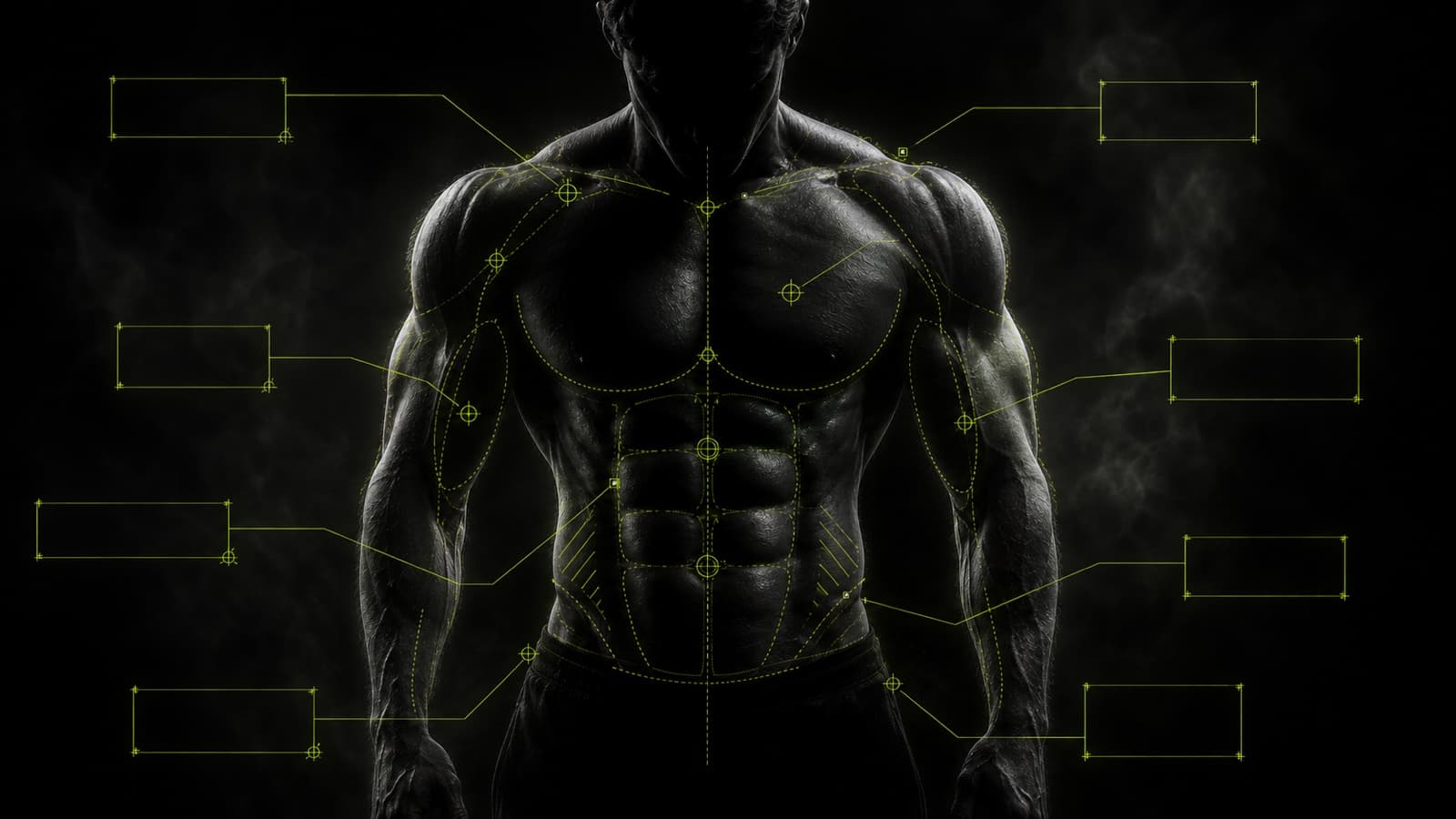
A physique analysis is a structured read of a physique from photographs, scored against a fixed rubric that was written before your photos ever arrived. Each part of that definition is doing work. Structured means the same components get checked on every body, in the same order. Fixed means the standard does not move depending on who is asking, who is judging, or what mood either of them is in. Neither of those things is true of a gym buddy's opinion or a forum thread, and both of them are the reason an analysis is worth having.
Done properly, a physique analysis returns an overall score on a stated scale, a rating for each major muscle group, a body-fat range with error bars, symmetry and proportion verdicts, and a projection of where the physique can realistically go. Done badly, it returns one flattering number and three compliments. The rest of this article is the difference between the two.
What separates a physique analysis from an opinion
You can get an opinion on your physique in thirty seconds, and it is worth roughly what it costs. Your training partner has watched you for years and cannot see you freshly anymore. A stranger online reacts to whatever the photo emphasizes, which is usually the lighting. Neither of them reads your back unless you force the issue.
An analysis differs on three points. It is complete: every region gets read, including the ones you never photograph. It is anchored: a score means the same thing for every body that passes through, so a 62 is a 62 no matter whose it is. And it is repeatable: the same rubric applied to new photos six months from now produces a comparison your memory cannot, because the rubric does not remember how you looked in March. What the resulting score measures, and what it deliberately does not, is covered separately.
What does a complete physique analysis contain?
Eight components. The list below maps one to one onto what a Rate My Body report returns, but it works as a checklist for judging any analysis from any source.
An overall score with a stated scale. A number is meaningless until you know what it is anchored to. Rate My Body scores 0 to 100 against the general population, on a deliberately generous curve, with public tier bands. Gold, 45 to 59, is the everyday average: a normal untrained adult with normal proportions lands there, roughly a 5 to 6 out of 10. Silver (30 to 44) is below that average, Bronze (15 to 29) well below it, and Iron (0 to 14) is an extreme outlier. Above the average sit Platinum (60 to 74), above average and visibly fit; Elite (75 to 89), fit and developed, an 8 to 9 out of 10, where a consistent, serious gym-goer belongs; and Apex (90 to 100), exceptional, an extreme minority of the population. Most people who upload land between 45 and 80.
Stated weights. A score you cannot decompose is a verdict, not a measurement. The Rate My Body weighting is fixed and published: proportions 25 percent, muscle development 25 percent, conditioning 20 percent, symmetry 15 percent, harmony 15 percent. The score rates how the body looks as a whole, proportions first, not how long you have trained or how hard. One consequence worth sitting with: a lean untrained body with good natural proportions can outscore a heavier, stronger one whose waist has swallowed its taper.
Per-muscle-group ratings. Six groups: arms, shoulders, chest, back, abs, legs, each on a 1 to 10 scale where 5 to 6 is an average untrained adult, 8 to 9 is a standout gym-goer, and 10 is world class. These six numbers are the actionable half of the report, and the reason to get one.
A body-fat range, not a decimal. A photograph supports an estimate like 14 to 17 percent. It does not support 15.2 percent, and a product that returns a decimal is selling precision it does not have. The range comes with its error bars stated.
Symmetry on both axes. Left against right, which most people pass, and front against back, which most people fail. A physique built entirely for the mirror is an incomplete physique, and an honest analysis says so.
Proportion verdicts. Shoulder width against waist, waist against hip, upper body against legs. Proportion carries the largest single weight in the score, so this section explains more of the final number than any other.
A standout feature and a fastest improvement. One card names the best thing about the physique, and one names the change that would move the score most per unit of effort. The second one is a training decision made for you.
A forward projection. A 12-month projection of where the physique goes if the fastest improvement gets addressed, plus a natural-ceiling track: where this frame can realistically end up without pharmacology. The report closes with three to five short tips. Male and female physiques run through the same structure but are judged against their own category standards, never against each other.
What did people use before AI physique analysis?
Before you could get a physique analysis online, there were three options, each with a real use and a real gap.
Bodybuilding coaches. A good coach has a trained eye and will read your physique honestly. The problems are access and calibration. Coaching costs real money, most coaches calibrate on stage competitors, so an everyday physique gets read as "not ready" rather than placed on any general scale, and two coaches will hand you two different verdicts, because each carries a private rubric.
Forum rate-me threads. The old default. Post photos, receive whatever the internet is feeling that hour. The two structural failures are cruelty and inconsistency: the score depends on the audience's mood rather than your body, harshness performs better than accuracy, and the same physique posted twice gets two different numbers. The photos also stay online indefinitely, which is a high price for a bad measurement.
DEXA scans. The opposite failure. A DEXA scan measures body composition precisely, and on fat mass and lean mass it beats any photograph. But it says nothing about aesthetics: no proportions, no symmetry, no per-group read, no sense of how the body actually looks. Two people with identical DEXA numbers can look nothing alike. Composition data complements a physique analysis. It does not replace one.
How does an AI physique analysis work?
Step one is a quality gate, before anything is scored and before anything is paid. The photos get checked for framing, lighting and whether the whole body is actually visible. A shot that fails goes back for a retake instead of producing a worthless report. On Rate My Body this check is free and runs before payment, and the analysis itself is a one-time $5 purchase, with no subscription and no account.
Step two is the rubric, applied identically to everyone. The model reads the same components in the same order with the same weights, and it knows nothing about you: not your training history, not your effort, not your excuses, and not what you scored last time. That ignorance is the feature. It is what makes two reports comparable and one report honest.
Step three is assembly: score, tier, six group ratings, body-fat range, symmetry and proportion verdicts, projection, tips. The report link is permanent; the photos are deleted within 30 days. The leaderboard is opt-in and shows a nickname only, no photos, with a global and a category rank. How accurate the whole pipeline is, with numbers, is its own article.
What makes the input good enough?
The analysis is only as good as the photos, and three variables decide that. Count: one to three photos are accepted, and the difference matters, because a single front shot forces back and legs to be inferred rather than observed, so one photo caps the report's confidence at low, no matter how good the shot is. Angles: front, side and back together let every verdict rest on observation. Lighting: flat, even light in front of the body; a ceiling spotlight manufactures definition that is not there, and a backlit window deletes definition that is. The photo guide covers the full setup in five minutes, and following it is the highest-leverage thing you can do before uploading.
How do you act on a physique analysis?
The overall score is for orientation, and for the share card. The action lives in the six group ratings, and the rule is short: the lowest number is the training priority. If arms rate 7 and back rates 4, the next six months of training are already decided, and the weak point playbook covers exactly how to run that block.
The second use is as a fixed reference over time. Train for a block, photograph under the same conditions, analyze again. The rubric has not drifted and does not know your history, so the delta is real. A retake with the same email also upgrades a leaderboard entry in place rather than creating a second one.
What an analysis will not do is train for you. It compresses the decision about what to do next: months of guessing become one number that is lower than five others. Acting on that number is still your job.
Curious how you would score?
Upload a photo and get your AI aesthetics score in minutes.
Get your score